Looking at the numbers the market has delivered since 2011, I feel a deep sense of pride in what we have collectively achieved, together with gratitude to our partners and investors, and a clear-eyed optimism about what lies ahead.
When we began in January 2011 with only Bralirwa’s IPO, the market capitalization was negligible and secondary trading almost non-existent. Today we have mobilized more than Frw 2.71 trillion in capital and our total market capitalization stands at Frw 6.6 trillion.
This is not merely growth on paper; it is concrete proof that a credible, well-regulated platform enables businesses and government to raise long-term capital efficiently and cost effectively.
We have helped reduce full dependence on traditional financing by directing funds into roads, energy, housing and other priority infrastructure—Frw 326 billion was raised through government bonds and listed 4 corporate bonds to the tune of Frw 33 billion in 2025 alone.
The launch of green and sustainability-linked bonds has been especially satisfying: these are practical tools that align capital markets with Rwanda’s Vision 2050 and NST@ in particular and our commitment to sustainable development.
Of course, the early years were a real test. Liquidity was minimal in early years, and we learned that listings alone are not enough. Markets grow when there is education, trust and deliberate inclusion.
That is why we relaxed SME listing rules in 2013 and have consistently invested in financial literacy programs. This happened as a direct result of focused work to democratize access to capital markets.
What gives the greatest satisfaction is seeing our investor base grow to more than 270,000 most of them coming indirectly through collective investment schemes with 95 % Rwandan—many of them young people and women participating through mobile platforms.
Landmark transactions such as Bralirwa and Bank of Kigali four times oversubscriptions and the MTN Rwanda listing in 2019 (USD 365 million market cap) and the 145 % oversubscribed ENERGICOTEL Series II bond in 2025 have created real wealth, generated employment and strengthened a culture of saving and investing among citizens.
Annual turnover reached a record Frw 187.84 billion in 2025 (up from Frw 129.42 billion in 2024), yet as a percentage of GDP it remains modest by international standards. External shocks have at times pushed the Rwanda Share Index down, as it did to 99.93 in November 2021.
These moments are not setbacks; they are part of building resilience. Today the RSI has recovered to 164.99 (as of 20 February 2026), and cumulative trading activity now exceeds Frw 28 trillion of USD 20 billion
Strategic steps such as linking with East African exchanges in 2013 and hosting the East Africa Commodity Exchange have widened our reach and delivered tangible results.
We recognize that the market is still relatively young. Some point to data gaps in the early years or the fact that we had only reached ten equities by 2022. I see these as opportunities rather than limitations.
Hosting the EAX, facilitating cross-listings such as RH Bophelo, and paying dividends consistently since 2020 have all built confidence.
Going forward we will tackle remaining constraints head-on: improving liquidity through new and innovative products such as REITs, ETFs, multicurrency denominated instruments and Sharia-compliant products; deepening institutional participation; and intensifying financial education so that no Rwandan sees the stock market as something for the elite.
By 2030, the Rwanda Stock Exchange (RSE) aims to be a leading gateway for African innovation, with at least 50% market capitalization to GDP, doubling of the investor base, and whole menu of new instruments fully operational.
We will continue working closely with the CMA and the National Bank of Rwanda to strengthen transparency and investor protection, while leveraging technology for real-time, inclusive trading that reaches every corner of the country—from Kigali to rural cooperatives and members of the diaspora.
This journey has always been about creating a healthier financial ecosystem that empowers businesses, protects savers and drives Rwanda’s continued ascent. The foundation built over these 15 years is solid but a lot needs to be done to accelerate development.
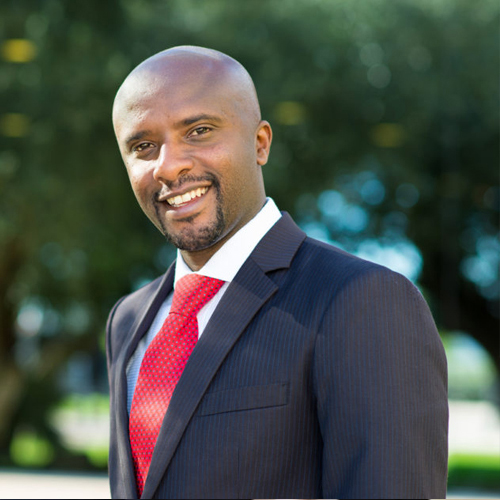
The Author, Pierre Celestin Rwabukumba is the President of the African Securities Exchanges Association (ASEA) and Chief Executive Officer of the Rwanda Stock Exchange.
Leave a Reply