The funding supports farmer training, capacity building, and modern production techniques aimed at strengthening food security and raising farm incomes.
The progress was highlighted during a consultative meeting that brought together SAIP-supported farmers from Huye District on February 24, 2026. The meeting focused on exchanging experience and identifying practical ways to further increase yields.
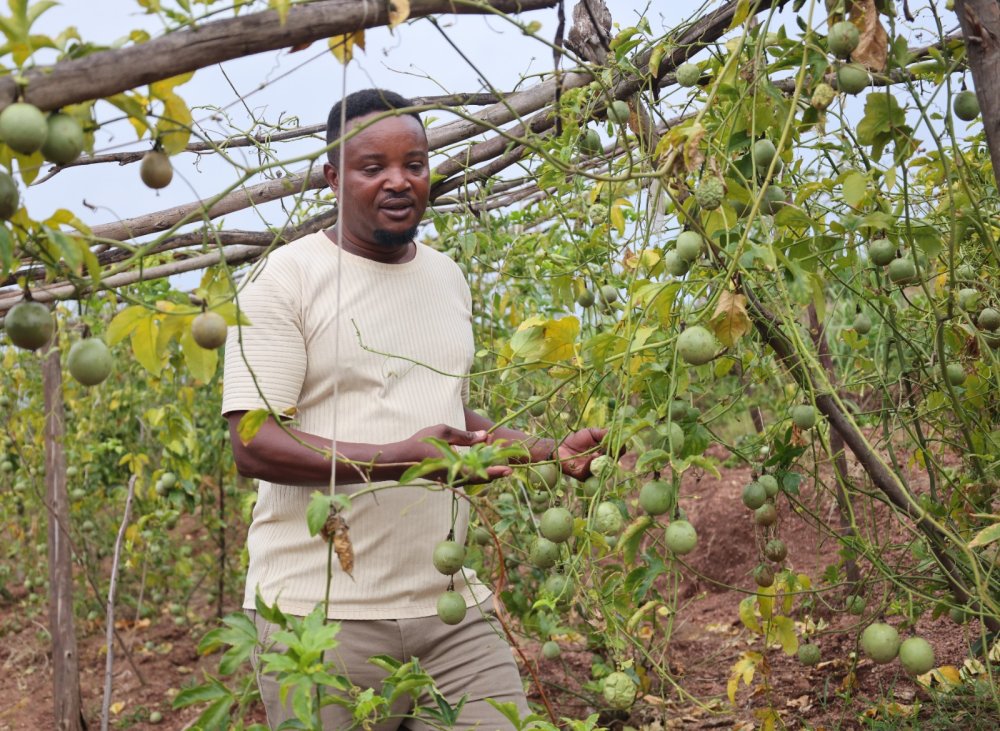
Launched in 2024, SAIP II operates in 20 districts across Rwanda. Among beneficiaries is farmer Darius Havugarurema, who grows fruits on more than five hectares. Before receiving SAIP training, the land had largely remained idle, producing only once every seven years.
With project support, he received over 7,000 fruit seedlings, including tomato trees, passion fruit, and avocado, along with a diesel-powered irrigation system and more than 800 meters of piping. The investment totaled nearly Rwf 40 million, half of which was subsidized by the project.
He said the transformation allowed him to fully commit to commercial farming, with initial harvests generating between Rwf 6 and 7 million.
Support has also extended to agro-processing. Entrepreneur Mutabaruka Théophile, who operates a rice processing plant in Sovu Industrial Zone in Huye District, said SAIP backing helped expand his operations.
He has since established a Rwf 650-million-animal feed factory, receiving Rwf 140 million in project support. The facility is expected to process six tons per hour.
He noted that by-products from rice processing that were previously discarded will now be converted into livestock feed, while strengthened links with maize and soybean farmers supported by SAIP will ensure a steady supply of raw materials.
Farmer cooperatives have also benefited. The Tuzamurane Cooperative, which grows maize, beans, and vegetables in Ruvungirana Marshland in Ruhashya Sector, received training that reached all members.
Cooperative leaders say new practices, such as planting protective vegetation along roadsides to prevent flooding, have improved resilience while creating additional income sources.
Members were also equipped with harvesting tents that allowed them to gather and protect crops from post-harvest losses.
SAIP Project Coordinator at RAB-SPIU, Mutabaruka Ezra, said the initiative aims to expand sustainable agriculture by improving irrigation, particularly small-scale irrigation, while strengthening post-harvest handling, storage, and market access.
Beyond field production, the project is supporting broader agricultural infrastructure, including the construction of eight storage facilities, cold rooms and cold trucks for transport of fruits and vegetables, construction of more than 200 greenhouses, and modern farming machinery, investments expected to deliver long-term gains in food production.
Overall, SAIP II represents a $20 million investment, with irrigation alone accounting for $5.7 million.
Leave a Reply