That institutional presence is matched by economic scale. Between 2019 and 2023, the UAE committed more than USD 110 billion in investments across Africa, the highest level by any single country during that period. More than USD 70 billion of that capital has been directed toward energy, green, and renewable sectors. This reflects a long-term assessment that energy access is the foundation of industrialisation and economic diversification.
Under the Africa Green Investment Initiative, USD 4.5 billion has been mobilised to accelerate clean energy development, with more than 60 projects in preparation across solar, wind, geothermal, battery storage, and green hydrogen technologies. Masdar’s USD 10 billion Africa programme and the Etihad 7 initiative aim to help expand access to electricity to up to 100 million people by 2035. These projects are designed to expand generation capacity and reduce structural power deficits.
Industrial growth also depends on trade integration and logistics efficiency. The UAE has concluded 9 Comprehensive Economic Partnership Agreements with African countries — Nigeria, DRC, Sierra Leone, Gabon, Angola, Kenya, Congo-Brazzaville, Mauritius, and the Central African Republic.
These agreements extend beyond tariff reductions to services, digital trade, and investment protection. They are structured to complement the African Continental Free Trade Area by strengthening value chains and facilitating cross-border competitiveness.
On the logistics side, DP World continues expanding operations across African ports, including a USD 1 billion upgrade of Dar es Salaam Port in Tanzania. AD Ports has broken ground on a new terminal in Luanda, significantly increasing container capacity in Angola. These are long-term trade-enabling assets aligned with regional integration ambitions.
Beyond investment, development and humanitarian engagement remain central. Over the past decade, nearly 40% of the UAE’s total foreign assistance, approximately USD 20.9 billion, has been directed to African countries, covering development, humanitarian, and charitable assistance.
Looking forward, water and climate resilience are emerging priorities. The UAE will co-host the 2026 UN Water Conference with Senegal from 2–4 December 2026. It will be the first time two Global South countries jointly lead this global process, underscoring a shared commitment to accelerating progress on water security and sanitation — a central development challenge across the continent.
Our approach reflects the lens through which we view this partnership and structural cooperation built for the decades ahead.
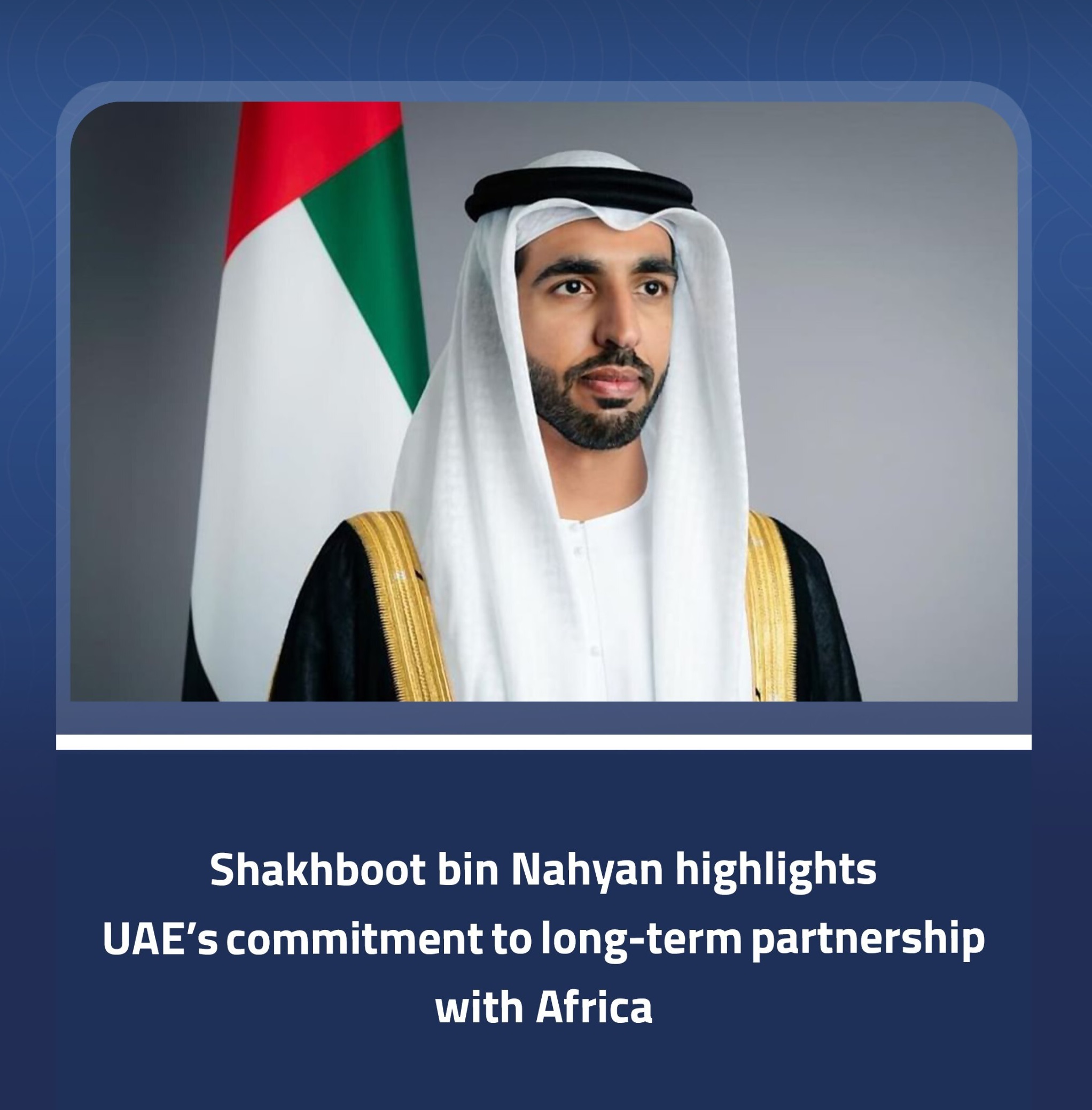
Sheikh Shakhboot bin Nahyan Al Nahyan is the Minister of State of the United Arab Emirates (UAE) , Ministry of Foreign Affairs
Leave a Reply